
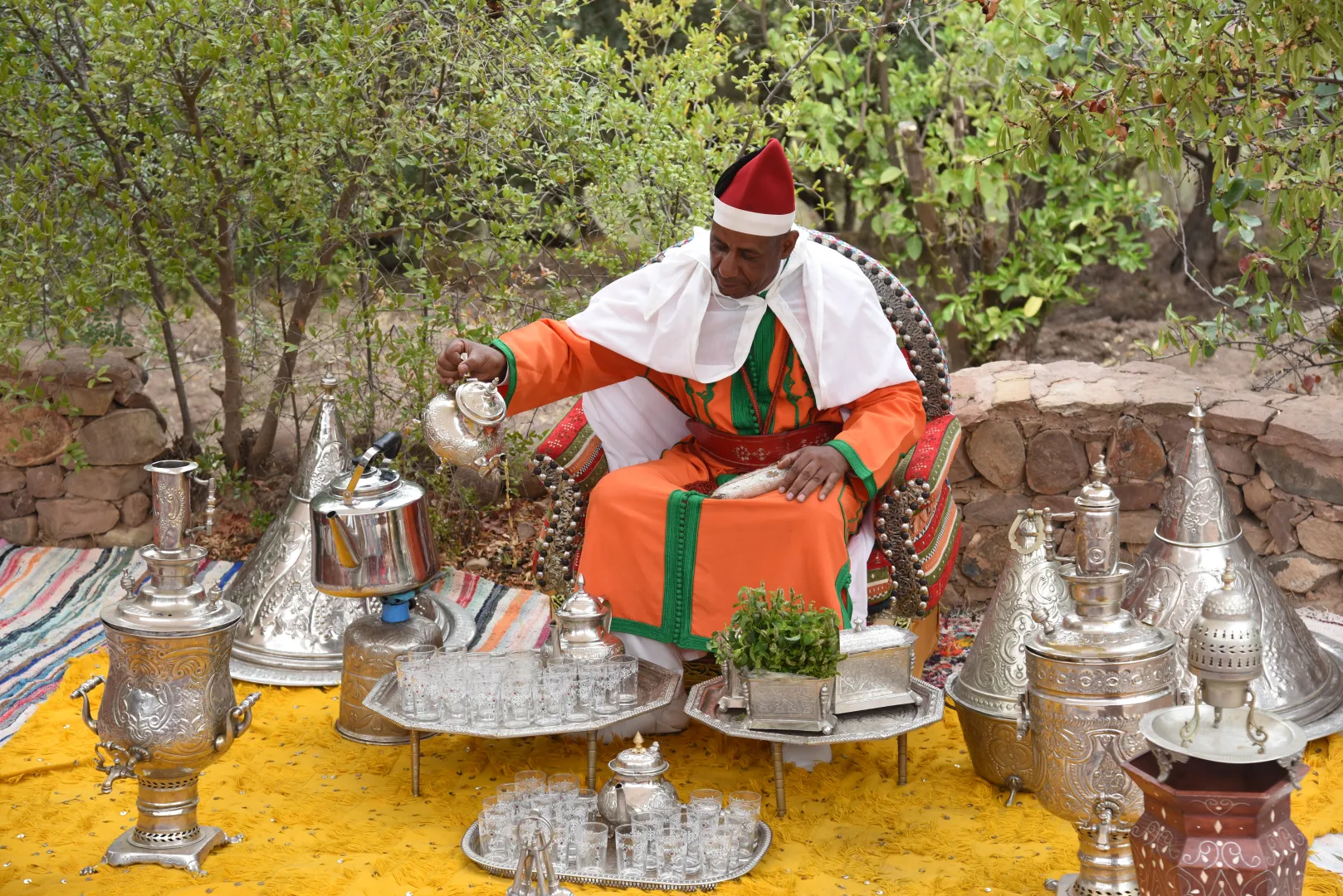
Sustainability has moved from competitive advantage to baseline expectation in corporate event planning. Nearly half of MICE buyers now actively prefer eco-friendly venues and sustainable event practices, and the regulatory pressure behind that preference is accelerating. The EU's Corporate Sustainability Reporting Directive (CSRD) now mandates detailed ESG disclosure, including business travel and event emissions, making sustainable MICE program design a legal requirement for many European organizations, not just an ethical preference.
For European companies evaluating sustainable MICE destinations for 2026, Morocco offers a structural advantage that most planners have not fully calculated: a short-haul destination with extraordinary cultural depth, world-class luxury infrastructure, and a DMC ecosystem increasingly built around responsible tourism principles.
A 500-person two-day congress generates an average of 350-500 tonnes of CO₂ equivalent primarily from air travel, which accounts for 70-80% of total emissions. For European groups, MICE Morocco cuts this figure dramatically compared to long-haul alternatives while delivering experiences that outperform those alternatives on every other dimension.
This guide covers how to plan a sustainable MICE Morocco program that meets ESG reporting requirements, reduces carbon footprint, supports local communities, and still delivers the exceptional participant experience that justifies the investment.
Why Morocco is a Structurally Sustainable MICE Destination
The Carbon Advantage
The most significant sustainability decision in any MICE Morocco program is the same decision that makes Morocco compelling on every other dimension: proximity.
Morocco is 3-4 hours from major European capitals by direct flight. A remote attendee generates 85-95% less CO₂ than a flying attendee, and a participant flying 3 hours generates dramatically less than one flying 12+. For European corporate groups, choosing Morocco over a long-haul incentive travel destination reduces per-participant air travel emissions by 60-75%, the single largest lever available to corporate event sustainability programs.
Morocco's high-speed train network already links Tangier, Rabat, Casablanca, and Marrakech, offering comfortable, low-carbon travel options for multi-city MICE Morocco itineraries. Planned extensions to Agadir and Fès will extend this low-impact connectivity further by 2030.
The Local Economy Advantage
Sustainable MICE programs are evaluated not just on environmental metrics but also on social impact, the "S" in ESG. Morocco's MICE ecosystem offers social impact integration that few destinations can match authentically.
Women-led argan oil cooperatives in Essaouira and Agadir provide corporate groups with immersive cultural experiences that directly fund economic empowerment for rural women. Tree planting programs with Atlas Mountain village schools create tangible environmental benefits while connecting corporate groups with local communities. Traditional artisan workshops preserving heritage crafts, leatherwork, metalwork, and weaving generate program fees that fund apprenticeships and preserve cultural heritage. These are not manufactured CSR activities. They are Morocco's existing social economy, accessible to MICE programs through established local partnerships.
The Infrastructure Advantage
Morocco's luxury hotel ecosystem is increasingly aligned with international sustainability standards. Eco-friendly desert camps in Agafay and Merzouga operate on solar power with controlled water usage and adapted waste management systems. Boutique mountain lodges built using local materials and employing local communities provide MICE accommodation alternatives to large hotel chains. Properties like Kasbah du Toubkal in the Atlas Mountains, 60 km from Marrakech, operate as community-run lodges at the highest point of North Africa.
The ESG Case for Sustainable MICE Morocco
What European Companies Are Now Required to Report
The regulatory landscape around corporate event sustainability has shifted fundamentally. ESG reporting frameworks now require transparent documentation across environmental, social, and governance dimensions:
Environmental metrics: energy and water use, waste generation, greenhouse gas emissions across all scopes, and sustainable material utilization for every corporate event.
Social metrics, community impact, attendee wellbeing, and labor practices of all suppliers and venues.
Governance metrics, supplier ethics, regulatory compliance, and transparent reporting.
Companies with robust ESG practices report operational performance improvements in 88% of cases. Organizations tracking sustainability ROI document cost reductions of up to 16% in supply chain expenses while boosting brand value by 30%. Energy-efficient venues reduce operational costs by 50-70% through LED lighting and smart building systems.
For corporate planners, sustainable MICE Morocco programs now generate two categories of value simultaneously: the exceptional participant experience that justifies the investment to HR directors and the ESG documentation that justifies the destination choice to sustainability committees.
The Carbon Mathematics of MICE Morocco
A single three-day conference can generate up to 5.5 tons of waste and up to 530 tons of CO₂ emissions. Air travel accounts for 70-80% of total event emissions.
For a European corporate group of 100 participants:
Long-haul alternative (Bangkok, 11 hours): Approximate CO₂ per participant: 2.1 tonnes Total flight emissions: 210 tonnes CO₂
MICE Morocco (Marrakech, 3 hours from Paris): Approximate CO₂ per participant: 0.4 tonnes Total flight emissions: 40 tonnes CO₂
Carbon reduction: 170 tonnes CO₂ equivalent to taking 37 cars off the road for a year achieved simply by choosing Morocco as the MICE destination.
This calculation is increasingly relevant to corporate sustainability committees and ESG reporting requirements. Sustainable MICE Morocco programs provide documentation-ready carbon reduction data that long-haul alternatives cannot match.
How to Plan a Sustainable MICE Morocco Program: Step by Step
Step 1: Carbon Budget Planning
Begin sustainable MICE Morocco program planning with carbon budget allocation, a practice now required by 40% of corporate planners tracking program sustainability metrics.
Calculate baseline emissions for your group size and departure city using the ICCA CO₂ tool or MeetGreen Calculator. Morocco's 3-4 hour proximity to European capitals provides the largest single carbon reduction available before any other sustainability measures are applied.
Document the carbon comparison between Morocco and alternative destinations; this data serves both internal ESG reporting and external sustainability communications.
Step 2: Sustainable Venue Selection in Morocco
Sustainable MICE Morocco venue selection extends beyond standard hotel criteria to include the following:
Eco-certification status: Green Key certification covers energy, water, waste, and biodiversity practices. Ask venues specifically about renewable energy percentage, waste management policy, and carbon footprint report provision post-event. The best green venues welcome these questions.
Location proximity: selecting hotels and venues within or near the Marrakech medina significantly reduces the need for motorized transfers throughout your program. For MICE Marrakech programs, medina-proximate venues provide logistics efficiency alongside an authentic cultural atmosphere.
Desert and mountain venues Agafay desert events powered by solar energy, with controlled water usage and adapted waste management, are available through No Limits Travel DMC's established partner network. Atlas Mountain retreats focus on low-waste operations and community engagement.
Step 3: Sustainable Catering Integration
Moroccan gastronomy provides sustainable MICE catering advantages that European alternatives struggle to match. Seasonal, locally sourced catering often prepared by village cooperatives reduces supply chain emissions while providing authentic participant experiences.
Sustainable catering practices for MICE Morocco programs:
Zero-waste catering strategies that eliminate food waste, which typically represents 40% of event-related disposal. Seasonal menu design aligned with Morocco's agricultural calendar. Local supplier sourcing that reduces transport emissions and supports the Moroccan food economy. Plant-forward menu options that reduce the carbon intensity of program catering without compromising the extraordinary culinary experience Morocco provides.
Step 4: Sustainable Activities and Experiences
Sustainable MICE Morocco activity programming combines authentic cultural experiences with measurable social impact:
Community-integrated cultural immersion: artisan workshop visits where program fees fund apprenticeships. Private Medina discovery with culturally embedded guides who provide economic benefit to local communities. Women-led cooperative visits in Essaouira and Agadir combine genuine cultural encounters with direct social impact documentation for ESG reporting.
Low-impact adventure activities: Atlas Mountain trekking with a low environmental footprint, kayaking at Bin El Ouidane combining team engagement with nature immersion, and walking-based medina exploration that minimizes motorized transport.
CSR-integrated program elements: tree planting programs with Atlas Mountain village schools, community engagement activities aligned with UN Sustainable Development Goals, and bird watching tours through coastal wetlands raising awareness about ecosystem protection.
Step 5: Transportation Optimization
Ground transportation represents a significant portion of sustainable MICE Morocco program emissions after air travel. DMC Morocco transportation planning for sustainable programs prioritizes the following:
Premium electric or hybrid fleet vehicles where available. Group transportation consolidation to minimize vehicle movements. Medina-adjacent venue selection to reduce transfer frequency and distance. Al Boraq high-speed rail integration for multi-city programs between Casablanca, Rabat, and Tangier dramatically reduces emissions versus domestic flights.
Step 6: ESG Documentation and Reporting
Sustainable MICE Morocco programs generate ESG documentation requirements that No Limits Travel DMC supports through post-program reporting:
Carbon footprint calculation per participant per program day. Local economic impact documentation, community benefit, cooperative engagement, and artisan partnership. Waste management reporting zero-waste catering outcomes and material reuse documentation. Social impact metrics: community engagement hours, cooperative revenue generated, and cultural preservation contribution.
This documentation serves corporate ESG reporting requirements under CSRD and supports internal sustainability communications to boards, investors, and stakeholders.
No Limits Travel DMC and No Limits Care: Sustainability Built In
No Limits Travel DMC's sustainability commitment is not a program add-on. It is structurally built into how we operate through No Limits Care, our dedicated initiative supporting Morocco's rural communities and sustainable tourism development.
Every MICE Morocco program we coordinate contributes indirectly to No Limits Care's community development activities. Working with No Limits Travel DMC for your sustainable MICE Morocco program means your organization participates in something larger than a well-executed event; it becomes part of Morocco's sustainable tourism ecosystem.
Our sustainable MICE Morocco supplier network includes vetted eco-certified hotels, cooperative catering partners, community-run cultural experiences, and transportation providers aligned with responsible tourism principles. We provide full ESG documentation for every program element, supporting your organization's sustainability reporting requirements.
Sustainable MICE Morocco: The 2026 Business Case
For corporate sustainability committees evaluating MICE Morocco programs in 2026, the business case is clear:
Carbon reduction: 60-75% lower flight emissions versus long-haul alternatives, documented and reportable under CSRD frameworks.
Social impact: authentic community benefit through established local economic partnerships, documentable for ESG social metrics.
Value efficiency: 30-40% better budget-to-experience ratio versus equivalent European alternatives, with sustainability investment generating additional cost savings through energy efficiency and waste reduction.
ESG brand value: companies with strong ESG practices report 30% brand value improvement. Sustainable MICE Morocco programs support this trajectory while delivering participant experiences that outperform conventional alternatives.
Regulatory compliance: CSRD-compliant carbon documentation, supplier ethics reporting, and community impact metrics generated by every program we deliver.
Explore our congress and seminar services in Morocco. Discover our incentive travel Morocco programs. Consider our luxury travel options and Morocco circuits for extended, sustainable programs.
Contact our sustainable MICE Morocco team for an ESG-compliant program proposal within 48 hours. Licensed N° ODV-1710 | IATA 54275314
Key Questions: Sustainable MICE Morocco 2026
Why is Morocco a sustainable MICE destination? Morocco's 3-4 hour proximity to European capitals reduces per-participant flight emissions by 60-75% versus long-haul alternatives. Combined with locally sourced catering, community-integrated cultural experiences, solar-powered desert venues, and an established eco-responsible DMC ecosystem, Morocco delivers measurable ESG compliance alongside exceptional program quality.
What ESG documentation can No Limits Travel DMC provide? We provide post-program carbon footprint calculation per participant, local economic impact documentation, waste management reporting, and social impact metrics for cooperative and community engagement supporting CSRD compliance and internal ESG reporting requirements.
How does Morocco's high-speed rail support sustainable MICE programs? Al Boraq high-speed rail connects Tangier, Rabat, Casablanca, and Marrakech, offering low-carbon transport for multi-city MICE Morocco programs and dramatically reducing emissions versus domestic flights or coach transfers.
What sustainable activities are available in Morocco for corporate groups? Women-led argan oil cooperative visits, Atlas Mountain tree planting programs, community artisan workshop partnerships, low-impact trekking and kayaking, and medina walking discovery experiences are all generating documentable social impact for ESG reporting.