

When planning a Morocco incentive program, the instinct is to choose one destination and build everything around it. Marrakech for culture. Agadir is for the beach. Essaouira for authenticity. This single-city approach makes logistical sense, until you realize what it costs in missed opportunities.
The most successful corporate incentive programs we design don't ask participants to choose between Morocco's imperial heritage and its Atlantic coastline. They don't force a decision between Medina immersion and ocean relaxation. Instead, they architect journeys that weave multiple destinations into a cohesive narrative that participants remember long after returning home.
This isn't about adding destinations for the sake of variety. It's about understanding how different environments unlock different team dynamics, create distinct emotional responses, and ultimately deliver the transformational experiences that justify incentive investment.
The Single-Destination Limitation
Most corporate programs default to concentration rather than composition. Choose Marrakech, spend every night in the same hotel, and organize day trips from a central base. It's operationally simple. It's also predictable.
The challenge isn't that single-destination programs fail; they don't. Marrakech delivers powerful cultural immersion. Agadir provides pristine coastal relaxation. Essaouira offers bohemian charm. The limitation is that each destination, experienced in isolation, tells only part of Morocco's story.
Consider what happens when participants spend multiple consecutive days in one location. The initial impact of that first encounter with the medina, that first sunset over the Atlas, and that first ocean view gradually normalizes. By day four in the same setting, what began as extraordinary becomes familiar. The Instagram moments decrease. The dinner conversations shift from "This is incredible" to "What's the wifi password?"
This isn't a criticism of any specific destination. It's recognition that human psychology craves progression, contrast, and narrative arc. A multi-day program that provides only a single environment, no matter how impressive, misses the opportunity to create the journey structure that transforms experience into lasting memory.
How Geography Shapes Experience
Morocco's geography is strategic, not just scenic. The country's diverse landscapes aren't accidents of geology; they're tools for experience design when understood correctly.
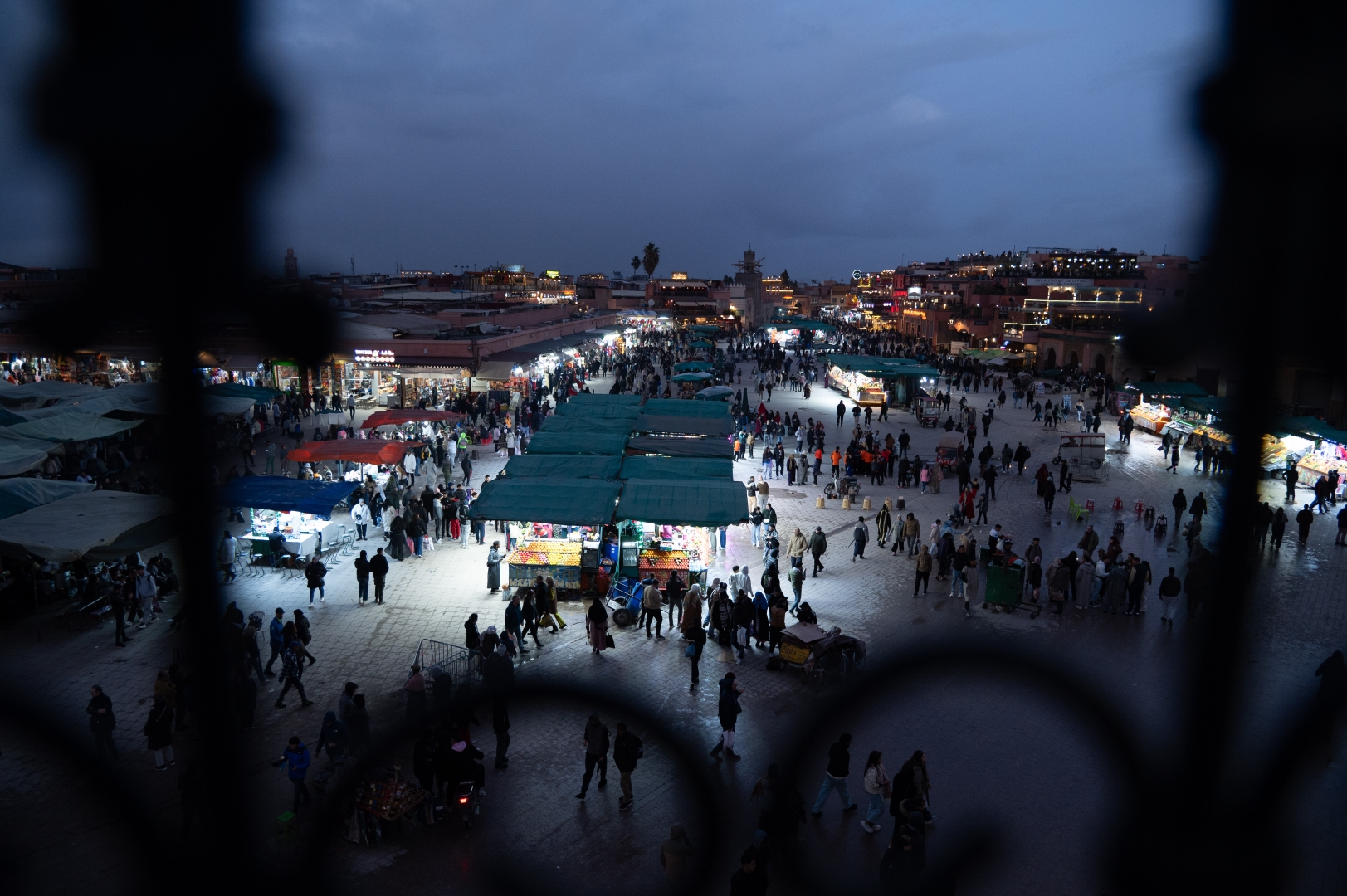
Marrakech sits at a cultural and logistical crossroads, imperial history layered over contemporary infrastructure, the Atlas Mountains providing a dramatic backdrop, and desert accessibility within reach. This convergence creates energy. The medina's sensory intensity, the contrast between historic palaces and modern venues, and the ability to shift from urban sophistication to mountain wilderness in under an hour. Marrakech doesn't just host events; it amplifies them.
Morocco's Atlantic coast operates on entirely different principles. Agadir's modern resort infrastructure delivers international luxury standards with Moroccan character. Essaouira balances authenticity with accessibility: a working port city that happens to charm, not a destination manufactured for tourism. The ocean changes the rhythm. Meetings feel different with sea breeze. Team-building activities shift from desert challenges to maritime experiences. Evening events transition from ornate riads to beachfront sophistication.
The power emerges in the combination. Start with Marrakech's cultural immersion, the intensity, the history, and the sensory overload that signals "you've left the ordinary." Then shift to coastal environments where participants process, integrate, and apply what they've experienced. The geography isn't decoration; it's the program architecture.
Strategic Transitions, Not Random Movement
The difference between sophisticated multi-city programs and itineraries that simply check boxes is intentionality in transition.
Poor multi-city design treats destinations as interchangeable modules: three days here, two days there, move the group, repeat. This approach creates travel fatigue without program cohesion. Participants remember the bus rides more than the destination shifts.
Strategic transition design uses movement to reinforce program objectives. If your incentive program rewards a sales team that exceeded targets through collaborative effort, the journey from Marrakech's competitive medina energy to Essaouira's collaborative artisan workshops isn't just geographic variation; it's narrative reinforcement. The destination shift mirrors the message shift.
Consider logistics not as obstacles but as program elements. The drive from Marrakech to the coast isn't dead time; it's decompression, conversation, and literally watching the landscape transform. When participants see the Atlas Mountains give way to argan forests, then olive groves, then finally the Atlantic, they're experiencing Morocco's diversity in real time. That journey becomes part of the story they tell when they return home.
What Multi-City Capability Actually Demonstrates
Any DMC can book hotels in multiple cities. What separates operational competence from genuine multi-destination expertise is the invisible infrastructure that makes programs feel seamless rather than logistically complex.
Venue relationships matter exponentially more in multi-city programs. In Marrakech, we've spent two decades building partnerships with properties ranging from heritage palaces to contemporary conference centers. Those relationships mean access, flexibility, and problem-solving capability. When we extend programs to coastal destinations, the same depth of partnership must exist. A contact isn't enough. We need the operational trust that comes from executing dozens of events together, the kind of relationship where a venue partner solves emerging challenges before our team even identifies them.
Supplier networks must be destination-specific yet centrally coordinated. The catering company that excels at desert dinners outside Marrakech isn't necessarily the right partner for beachfront events in Essaouira. Audio-visual teams, transportation providers, and activity operators each require local expertise. But they all need to operate within unified quality standards and communication protocols. That coordination infrastructure is invisible to participants, which is exactly the point.
Crisis management protocols become more complex with geographic distribution. Weather affecting coastal portions of a program. Venue issues requiring rapid alternatives. Transportation delays. Medical situations. Multi-city programs don't just need backup plans; they need backup plans that account for reduced proximity to resources. When we design programs spanning multiple destinations, the operational complexity increases geometrically, not arithmetically.
The Marrakech-Coast Combination Architecture
Marrakech functions as more than a starting point it's the cultural anchor that gives multi-city programs their Morocco authenticity. The medina's energy, the proximity to desert and mountains, and the concentration of heritage venues alongside modern infrastructure. This isn't where programs simply begin; it's where the Morocco narrative establishes its foundation.
Extending to Atlantic coastal destinations isn't about beach time though ocean access certainly provides that. It's about contrasts that deepen the overall experience. Marrakech's intensity followed by Essaouira's relaxed pace. Imperial architecture contrasted with maritime simplicity. Desert heat giving way to ocean breeze. These shifts aren't just pleasant variations; they're cognitive resets that keep participants engaged and receptive.
The specific coastal destination choice depends on program objectives, not just participant preferences. Agadir delivers resort luxury and water sports infrastructure. Essaouira provides bohemian authenticity and cultural depth alongside ocean access. Neither is inherently better; they serve different program needs. Understanding which combination creates the right narrative arc for specific client objectives is where DMC expertise translates into program success.
Beyond the Obvious Combinations
Marrakech-to-coast represents the most common multi-city structure because it works. But Morocco's geography offers other combinations worth considering for specific program types.
Atlas Mountain integration creates entirely different dynamics. Incorporating high-altitude experiences, whether adventure activities, luxury mountain retreats, or Berber village encounters, adds a vertical dimension to coastal-desert narratives. The mountains provide isolation and intensity that neither the desert nor the ocean delivers.
The Imperial Cities circuit, Fes, Meknes, and Rabat, offers historical depth for programs where cultural education justifies logistical complexity. These combinations work best for extended programs where participants value intellectual engagement alongside experiential immersion.
Desert immersion beyond Marrakech day trips, overnight Sahara experiences, luxury desert camps, and extensive dune environments appeal to programs prioritizing transformational impact over comfort consistency. These additions raise operational stakes significantly but deliver Instagram-proof memories nothing else can match.
Operational Realities They Don't Advertise
Here's what multi-city Morocco programs actually require that single-destination events don't:
Transportation coordination becomes program-critical, not just logistical support. Moving groups between cities isn't a simple A-to-B transfer. It's timing management (arrivals synchronized with departures), comfort maintenance (luxury vehicles appropriate for executives), contingency planning (backup vehicles, alternative routes), and experience integration (making the journey itself valuable rather than dead time).
Venue scouting must happen in person, repeatedly, for each destination. Photos don't reveal lighting challenges. Site visits expose acoustics issues. Only physically standing in spaces during different times of day reveals whether they deliver what marketing materials promise. For multi-city programs, this due diligence multiplies. It's not optional; it's the difference between programs that work and programs that disappoint.
Communication infrastructure needs redundancy. In Marrakech, our team operates from central offices with backup systems. When programs extend to coastal destinations, we need equally reliable communication and decision-making capability at each location. This isn't about having phone numbers; it's about empowered on-site coordinators who can solve problems immediately rather than waiting for headquarters approval.
Quality control consistency across diverse environments requires standardized protocols executed by different local teams. The catering standards, the audio-visual quality, the transportation punctuality everything must maintain identical benchmarks, whether in Marrakech or Essaouira. That consistency demands training, oversight, and accountability structures most DMCs simply don't build.
When Multi-City Makes Sense (And When It Doesn't)
Not every incentive program benefits from multi-destination complexity. Understanding when geography serves strategy versus when it creates unnecessary logistics is crucial.
Multi-city programs excel when Program duration supports it (rushing through destinations defeats the purpose). Participant demographics value diversity over depth. Program objectives align with narrative arcs that different environments provide. The budget accommodates increased operational complexity without compromising quality.
Single-destination concentration works better when: Event focus is intensive (conferences requiring consistent venue access). Group size creates movement challenges. Participant preferences favor deeper immersion over breadth. Logistical simplicity enables program elements that geographic variety would complicate.
The decision isn't about which approach is superior. It's about matching program structure to client objectives, participant expectations, and budget realities. Sometimes the most sophisticated choice is recognizing when simplicity delivers superior results.
The Multi-City Advantage in Competitive Proposals
When evaluating Morocco DMC proposals, multi-city capability reveals operational depth. Any company can send a PDF itinerary listing multiple destinations. The difference appears in how they discuss logistics, what questions they ask, which challenges they acknowledge, and what solutions they propose.
Strong multi-city proposals demonstrate: Specific venue knowledge (not generic descriptions). Realistic timing (not aspirational schedules). Identified challenges (not marketing claims that everything is easy). Concrete solutions based on actual experience executing similar programs.
Warning signs in weak proposals include: Vague descriptions like "luxury resort" without specific properties. Unrealistic day structures that don't account for travel time. Identical per-destination costs suggest they haven't actually sourced venues. Failure to discuss backup plans or contingency scenarios.
The question to ask potential DMC partners isn't just "can you organize multi-city programs?" It's "What makes your Essaouira venue relationships different from a DMC based only in Marrakech?" The answer reveals whether they're coordinating external suppliers or managing integrated operations.
Morocco's geography is an asset, not a constraint but only when expertise matches ambition. Multi-city incentive programs deliver impact that single-destination concentration cannot. They create narrative progression, emotional variation, and memorable contrasts that participants carry forward long after the program concludes.
The sophistication lies not in adding destinations but in understanding how different environments combine to serve program objectives. Marrakech's cultural power. Coastal Morocco's contrasts. The transitions between them. When designed with strategic intent rather than logistical convenience, these combinations transform good incentive programs into exceptional ones.
The question isn't whether your program should incorporate multiple destinations. It's whether your DMC partner understands the difference between coordinating logistics and architecting experiences.
Designing multi-destination Morocco programs requires operational depth most DMCs simply don't possess. At No Limits Travel, our two decades building infrastructure across Morocco from Marrakech's medinas to Atlantic coastal destinations means we don't coordinate external suppliers. We manage integrated operations. Ready to explore how multi-city programs could elevate your next incentive?
Contact Our Team We respond within 24 hours with strategic consultation, not templated proposals.